
Overview of BIS CRS Certificate
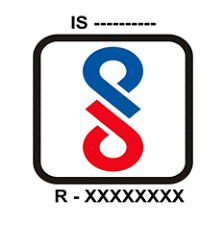
In order to authorize the use of the Standard BIS Mark and a distinct R-number by manufacturers of certain items, the Bureau of Indian Standards developed the Compulsory Registration Scheme. This scheme is based on the manufacturer's self-declaration of conformity for goods. The Bureau of Indian Standards (Conformity Assessment) Regulation of 2018 (System II, Schedule II) governs the conformity assessment system that is followed in the granting of the BIS CRS license and its management. Under the program, producers who are certified by the Bureau of Indian Standards CRS may use the mark as shown below on any one of their goods, packaging, or both.
Under the scheme, firms that are certified by the BIS Compulsory Registration Scheme may use the mark as seen in the accompanying picture on their goods, packaging, or both. If size restrictions prevent the mark from being placed on the goods, it may, however, be displayed just on the package. If your product is registered under the Bureau of Indian Standards CRS, however, you will need to display the mark.
Introuduction of BIS CRS Certificate
Compulsory Registration Scheme is referred to as CRS. In 2012, the
Department of Electronics and Information Technology
introduced this scheme. All electronic products that are listed as
required
by the Mandatory Product List for the Bureau
of Indian Standards (CRS), including printers, RFID/smart card readers,
Bluetooth speakers, headphones, earbuds, CCTV
cameras, secondary cells, batteries, and other similar devices, must be
registered with the Bureau of Indian Standards.
To sell their goods in Indian marketplaces, manufacturers, both domestic
and
foreign, must seek this CRS certification.
As opposed to BIS/ISI certifications, BIS registration does not require
a
BIS officer to conduct a factory or laboratory
inspection. It usually takes 20 to 25 working days to complete the bis
registration process.
The original term of a Bureau of Indian Standards registration is two
years,
after which it may be extended for an
additional two to five years prior to its expiration date. For 76
electronic
products, the Department of Electronics and
Information Technology requires a mandatory certificate. Of these, 63
are
added by the Ministry of Electronic and
Information Technology (MEITY), 5 by the Ministry of New and Renewable
Energy (MNRE), and 8 by the Ministry of Heavy
Industries' Division of Indian Electrical Equipment Industry (MHI).
Two additional chemical sector items have recently been added to the
Bureau
of Indian Standards Registration's Mandatory
Product List (CRS). In the initial phase, MEITY registered 15 types of
electronic items in the Company Registration
Order (CRO). It later introduced five stages of more electrical items.
Eight
items relating to low voltage switchgear
and control gear and five products relating to solar photovoltaic
systems,
devices, and components were added to the
Bureau of Indian Standards CRS registration scheme by other departments.
Benefits of BIS CRS Registration
The benefits of the BIS registration include the following:
- A product is presumed to be very reliable and of high quality if it has a BIS registration number.
- BIS certification enhances the marketability and growth of your product by enhancing its reputation.
- Bureau of Indian Standards-certified products are long-lasting and function very well, they are real and reliable.
- Products with a Bureau of Indian Standards registration is probably of higher quality and draw in more buyers.
- Once you get the BIS CRS certification; customers are aware that your products comply with the quality standards.